
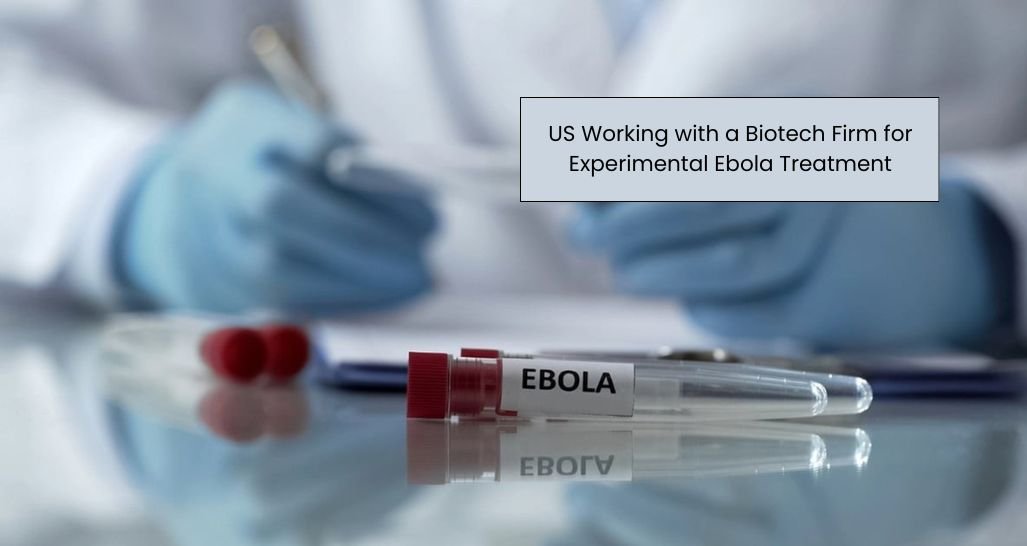

As fears grow over the rapidly worsening Ebola outbreak in Central Africa, the United States of America has quickly intensified its efforts to start experimental treatments that could eventually help contain the virus before it spreads any further. According to U.S. health officials, various federal agencies are now working in tandem with a small biotechnology company to prepare an investigational Ebola therapy for emergency use in high-risk cases.
This time, federal agencies are working with a California-based biotech firm named Mapp Biopharmaceutical, a company known for its earlier work during the devastating 2014 Ebola crisis in West Africa. Now, the focus is on an experimental monoclonal antibody treatment designed to fight multiple strains of the virus. Early laboratory findings suggest the therapy may also be effective against the Bundibugyo strain, the rare variant currently driving the outbreak in the Democratic Republic of Congo (DRC).
The latest outbreak has alarmed global health authorities because of its scale and the speed with which it spread before being detected. The World Health Organization (WHO) recently classified the situation as a Public Health Emergency of International Concern after suspected infections crossed hundreds of cases and deaths climbed sharply in affected regions. Neighboring Uganda has also confirmed infections linked to the outbreak, increasing fears of wider regional transmission.
Health experts say the new Bundibugyo strain is particularly challenging because of the absence of an approved vaccine or targeted antiviral treatment. Pre-existing Ebola vaccines were primarily developed for the Zaire strain, which also caused several outbreaks across Africa previously. Scientists are now racing to evaluate if experimental medicines and vaccine candidates can provide at least partial protection against the new variant.
According to U.S. Department of Health and Human Services officials, the Biomedical Advanced Research and Development Authority (BARDA) is coordinating closely with Mapp Biopharmaceutical and other agencies. The effort is aimed at making the therapy available for individuals considered at high risk of exposure, including frontline healthcare workers and emergency responders operating in outbreak zones.
The urgency of the response has been further heightened by growing concerns over limited testing capacity in Eastern Congo. According to WHO representatives, diagnostic systems in the region remain severely strained, which is further slowing down the identification of infected individuals and eventually delaying isolation measures. Some of the first tests used during the outbreak were designed for different Ebola variants, contributing to the weeks-long delay before authorities confirmed the spread of the disease.
International aid groups on the ground have also warned of shortages in protective equipment, laboratory materials, and staffing. Several humanitarian organizations have described the outbreak zone as extremely difficult to manage because of ongoing conflict, weak healthcare infrastructure, and population displacement. WHO teams and medical charities are now rushing supplies and personnel into affected areas in an attempt to strengthen surveillance, contact tracing, and treatment operations.
The outbreak has already affected international personnel. Earlier this week, U.S. officials confirmed that an American working in Congo tested positive for Ebola and was later transferred to Germany for specialized treatment. Authorities continue to stress that the overall risk to the United States remains low, though monitoring efforts have intensified.
For now, scientists remain cautiously hopeful that experimental therapies could help slow the outbreak’s momentum. However, experts warn that without rapid containment measures and stronger international support, the crisis could escalate significantly in the coming weeks.