
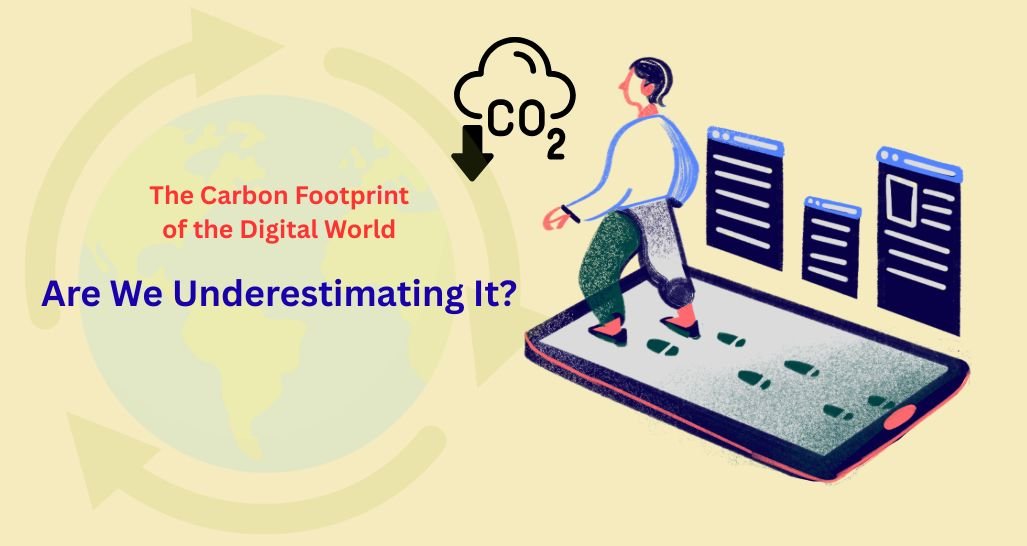

Even though digital transformation is the only way to define progress currently, we frequently fail to consider the impact that our lives online have on the environment. The digital ecosystem has emerged as a significant but largely unrecognised contributor to the global carbon emissions burden. The range of activities encompasses anything from sending emails and streaming videos to managing complex business systems. The concept of a digital carbon footprint is gaining attention, but many still underestimate its scale and impact.
People know that businesses like transportation and manufacturing have a big impact on the environment, but the internet’s impact on the environment is mostly buried behind screens and servers. It is important to look at how this unseen infrastructure affects the globe as we become more reliant on digital technologies.
Understanding the Digital Carbon Footprint
When we utilise digital devices, networks, and services, we create greenhouse gases that make up our digital carbon footprint. You need energy for everything you do online, from looking at a website to submitting a file to taking part in a video call. Data centers, network infrastructure, and end-user devices use most of this energy.
These steps may not seem like much on their own. But when you add up the effects for billions of users around the world, they become very big. The growing need for digital services has caused energy use to rise, which has raised worries about sustainability.
Data Centers: The Hidden Energy Giants
Data centers are huge buildings that store, process, and send forth data. They are the heart of the digital world. These centers are necessary to run anything from social media sites to banking systems. But the energy use of data centers is a big part of the digital carbon footprint.
To keep servers running and cooling systems in good working order, data centers need constant power. Electricity is consumed in huge quantities by several of these plants, which run around the clock. It causes a lot of carbon emissions in places where fossil fuels are still used to generate electricity.
The Environmental Cost of Everyday Internet Use
The internet influences the environment that goes beyond data centers. Cables, routers, and transmission towers are all parts of the network infrastructure that use power. Also, billions of devices, like smartphones, laptops, and tablets, need electricity to work and charge.
Streaming high-definition videos, playing games online, and using cloud-based apps are all activities that use a lot of energy. For example, streaming services need data to be sent all the time, which puts more strain on both the network and the server. The carbon footprint that comes with consuming more content also goes up.
Cloud Computing: A Double-Edged Sword
Cloud computing has changed the way organisations work by giving them flexible and cheap options. Cloud computing emissions are an essential part of the digital carbon footprint that people often forget about.
Cloud services can make things run more smoothly by cutting down on the requirement for physical infrastructure and making greater use of resources. On the other hand, the huge data centers that make cloud computing possible need a lot of power to work.
Why We Underestimate the Impact
One of the main reasons people do not think the digital carbon footprint is as big as it is is because they cannot see it. Digital emissions are not clearly observable like pollution from factories or cars. This makes it simple for people and groups to forget that they are part of the problem.
People typically think of digital technology as “clean” or “green” since they require fewer physical resources. This is true in some circumstances, but it does not change the fact that using energy has an environmental cost.
Moving Towards Sustainable Digital Practices
People, businesses, and governments all need to work together to deal with the internet environmental impact. Businesses can buy energy-saving gadgets, convert to renewable energy sources, and reduce data centers energy consumption.
Being cautious with technology is another way individuals can contribute. You may lessen your impact on the environment by reducing data use, limiting streaming at high resolution, and making good use of cloud storage.
Conclusion
The digital world has changed how we live today by making things easier, more connected, and more creative. But this progress comes at a cost to the environment that is often not noticed. The digital carbon footprint, which comes from things like the energy use of data centers, the environmental impact of the internet, and the emissions from cloud computing, is a growing problem that must be addressed.
The more we rely on digital technology, the more it is essential that we are aware of the hidden consequences that it has on the environment and that we take steps to mitigate those effects. By increasing knowledge and employing ways that are favourable to the environment, we can make certain that the digital future will not only be technologically sophisticated but also beneficial to the environment.