
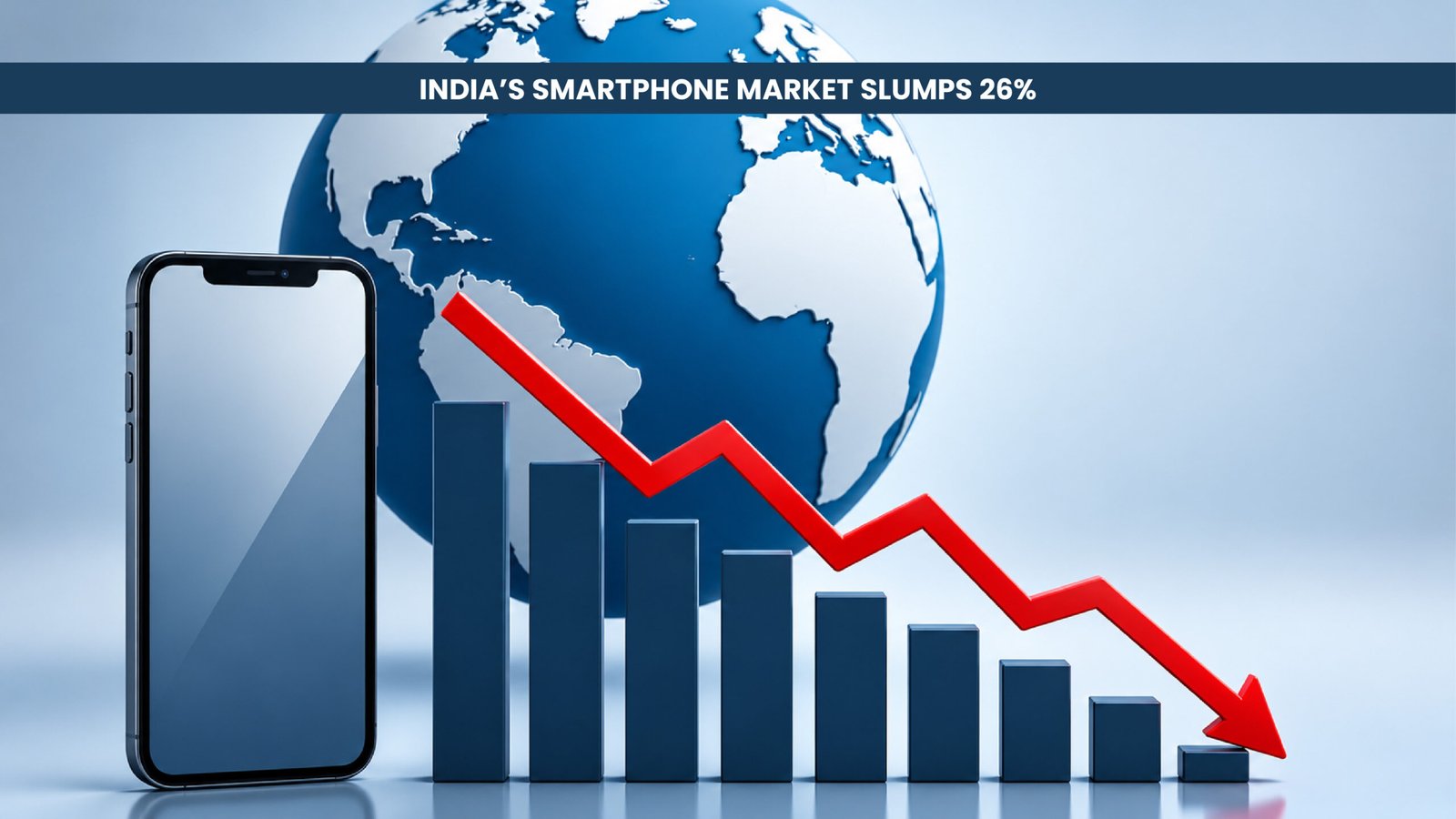

India’s smartphone market is facing a difficult time. Even as the festive shopping season began, shipments fell sharply in the third quarter of 2026, signalling that rising prices and cautious consumers are reshaping one of the world’s largest mobile markets.
According to research firm Omdia, smartphone shipments in India dropped 26% year-on-year to 35.8 million units in the July–September quarter. That was the lowest third-quarter shipment volume since 2016, despite the traditional festive-demand boost.
The decline reflects more than a temporary slowdown. Higher device prices, longer replacement cycles, and weaker online sales momentum are forcing manufacturers to rethink how they compete for consumers increasingly reluctant to upgrade.
Diwali’s timing also played a role. With the festival falling later in the calendar, some retailers postponed inventory build-up from September into October, amplifying the quarterly decline.
Samsung Moves Back to the Top
Amid the market contraction, Samsung reclaimed the leading position in India’s smartphone market for the first time since the first quarter of 2024.
The South Korean company shipped approximately 6.7 million smartphones, mainly due to its Galaxy A07, A17 and A27 models. Its higher-end portfolio, including the Galaxy S26 series, foldable devices and S26 FE, also strengthened its presence across price segments. Financing options, bank cashback and exchange offers helped encourage upgrades.
Vivo ranked second with 6.4 million units, although shipments fell 34% year-on-year—the steepest decline among the five largest vendors. Oppo followed with 4.9 million units, down 24%, while Xiaomi shipped 4.7 million, a decline of 28%. Apple rounded out the top five with 3.9 million units.
The rankings highlight a market in which brand strength alone is not enough. Manufacturers must balance pricing, product availability, retail partnerships, and financing to persuade consumers to replace devices they may otherwise continue using.
Rising costs are particularly challenging for brands that built their market positions around competitive pricing.
Omdia reported that higher component costs forced Xiaomi to make trade-offs involving pricing and memory and storage configurations, weakening its traditional value proposition. Vivo also faced pressure from repeated price increases and limited availability in entry-level segments.
These pressures matter because affordability remains central to India’s smartphone market. When entry-level devices become more expensive, consumers may postpone purchases, choose lower specifications, or move towards promotional offers rather than paying full price.
The shift is also changing the balance between online and offline sales. Fewer exclusive launches, less pronounced promotional differences, and weaker online-focused shipments reduced the traditional advantage of major festive e-commerce events. Chinese manufacturers’ combined market share fell from approximately 75% in the third quarter of 2025 to 68% in the same period of 2026.
Omdia expects India’s smartphone market to decline by a further low-single-digit percentage in 2027, with pricing pressures likely to continue into the first half of the year. Longer device lifecycles and cautious replacement spending could remain structural challenges for the industry.
Manufacturers will need to sharpen their strategies through better financing, trade-in programmes, stronger retail partnerships and clearer product differentiation. The brands that succeed may not necessarily be those launching the most devices, but those giving consumers a compelling reason to buy one.