
Children entering school now will graduate into a workforce shaped by automation, artificial intelligence, and roles that may not yet exist. Schools and families can’t predict every technical skill students will need, but they can help young people develop the reasoning, communication and learning habits that transfer across careers.
That preparation starts early. When children learn how to ask useful questions, manage frustration and explain their thinking, they gain tools that support academic progress now and adaptability later. The practical challenge is to build those skills while still meeting each student’s immediate needs.
The Evolving Demands of the Workforce
Employers increasingly need people who can evaluate information, communicate clearly, and adjust when tools or processes change. Technical knowledge still matters, but specific platforms can become outdated quickly. A student who knows how to learn a new system, test an idea, and work through an unfamiliar problem will be better equipped for that change.
Education leaders have identified several employability skill shifts that deserve attention, including a greater focus on adaptability and applying knowledge in real situations. Schools can respond by giving students more opportunities to use academic concepts, explain decisions, and revise work after receiving feedback.
A math lesson, for example, can go beyond finding the correct answer. Students might compare two solution methods, describe which one is more efficient, and check a classmate’s reasoning. In a science class, they could review evidence from a simple experiment and explain why the result did or didn’t support their prediction. These activities develop judgment alongside subject knowledge.
Families can reinforce the same habits at home. Ask a child to explain how they reached an answer instead of only checking whether it’s correct. Invite them to plan a weekly schedule, estimate the cost of several household items, or compare two credible sources about a topic they enjoy. Small tasks show students that learning has a purpose beyond the next test.
Building Foundational Skills Early
Early education gives children a base for later academic and professional growth. Language development helps them understand instructions and express ideas, while early number sense supports more advanced mathematical reasoning. Self-regulation also affects whether a child can stay with a task, handle mistakes, and seek help at the right time.
The connection between early education and brain capital shows why these first experiences matter to the wider economy. Skills built in childhood influence later learning capacity, productivity and participation in work. That makes early support a long-term investment as well as an immediate educational priority.
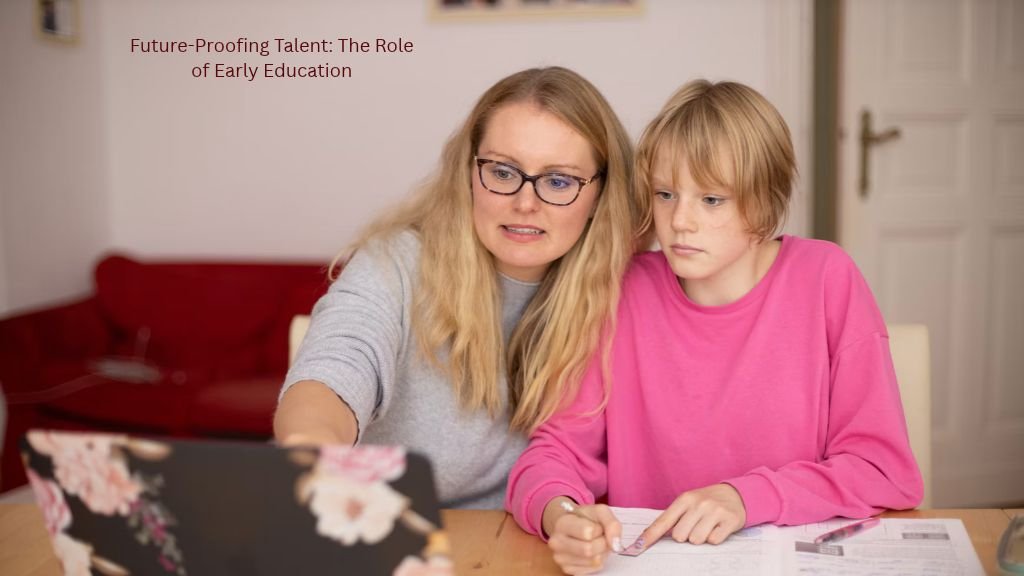
Support should also continue when students move into higher grades. A fourth grader who has trouble with fractions may later struggle with ratios and algebra. Addressing the original gap early can prevent years of confusion. Families seeking individual academic help can review services through GradePotentialTutoring.com, which connects K-12 and college students with private tutors for in-home or other convenient support.
Parents can watch for specific signs that extra help may be useful. These include repeated trouble with the same concept, unusually long homework sessions, and a sudden reluctance to discuss a subject. Teachers can often identify the precise skill involved, such as decoding multisyllable words or regrouping during subtraction. Once the problem is clearly defined, practice can focus on that skill instead of repeating entire units.
Personalized Paths to Academic Success
Students rarely learn at exactly the same pace or respond to the same explanation. One child may understand fractions after seeing a number line, while another needs to divide real objects into equal groups. Personalized instruction starts by identifying what the student already knows, where the breakdown occurs, and which explanation makes the concept click.
A useful plan should include a specific goal and a simple way to measure progress. “Improve in math” offers little direction. “Solve eight out of 10 two-step equations without prompts” gives the student, teacher, and family a clear target. Once the student reaches it consistently, the goal can advance.
Keep these plans manageable. A student who needs help in several areas may become discouraged if every weakness turns into a daily assignment. Choose the skill that blocks the most progress and schedule two or three focused practice sessions each week. Ten attentive minutes can produce better results than an unfocused hour.
Personalization also includes building on strengths. A student who enjoys drawing might create a visual timeline for a history unit. Someone interested in sports could practice percentages through player statistics. These connections give unfamiliar material a recognizable structure without lowering academic expectations.
Progress reviews matter as much as the original plan. Every few weeks, look at recent assignments, quiz results, and the amount of help the student needed. If accuracy has improved but confidence remains low, include low-pressure opportunities to demonstrate the skill. If progress has stalled, change the explanation, practice format, or session length. A flexible plan keeps support tied to evidence instead of habit.
Preparing Students for a Dynamic Future
Future readiness grows through repeated experiences that require students to think, communicate, and recover from setbacks, thereby future-proofing students. Schools can create those experiences through group projects, presentations, and open-ended tasks. Families can support them through everyday responsibilities that require planning and follow-through.
A middle school student could plan a meal within a fixed budget, calculate quantities and adjust the list when prices change. A high school student might compare training requirements for three careers, then present the trade-offs in time, cost, and likely daily work. Each task combines academic knowledge with research, decision-making and communication.
Students also need adults who understand child development and can create stable learning environments. Consistent staffing and skilled educators help children form relationships that support curiosity, confidence, and participation.
As students mature, they should gradually take more ownership. Let them help set learning goals, track deadlines, and decide which study method to try. After a test or project, ask what worked, what caused difficulty, and what they would change next time. Reflection turns one assignment into guidance for the next.
Advanced study can expand those habits by exposing learners to harder material and greater independence. Readers exploring that next stage can review how advanced education can help students prepare for future opportunities. Still, readiness is built long before an application or course selection. It appears when a child can face a difficult problem, choose a strategy, and keep working after the first attempt fails.
That response to difficulty may be the most durable advantage education can provide. Jobs and technology will keep changing, but students who know how to learn, revise, and ask for targeted help will have a practical way forward.