
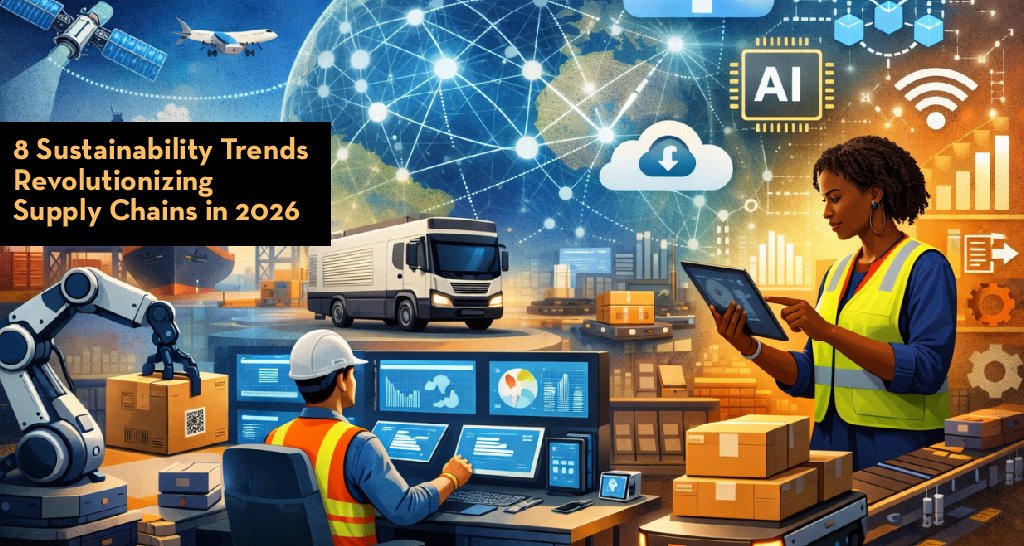

As global emphasis on environmental accountability grows, supply chains are experiencing a significant transformation. By 2026, sustainability will have evolved from a mere corporate buzzword to a crucial strategic necessity. Below are eight essential trends that are influencing the future of sustainable supply chains.
- Circular Economy Integration
Organizations are transitioning from traditional linear supply models to adopt circularity, wherein products are crafted for reuse, remanufacturing, and recycling. This transformation minimizes waste, preserves resources, and diminishes environmental impacts, all while generating new business prospects in the repair and resale sectors.
- Carbon Transparency and Tracking
Digital technologies are facilitating the real-time monitoring of carbon emissions throughout complete supply chains. As regulatory and consumer pressures increase, businesses are implementing carbon accounting systems and lifecycle assessment tools to quantify, disclose, and minimize emissions at each phase.
- Renewable Energy in Logistics
The transportation industry, a significant contributor to emissions, is undergoing decarbonization via the adoption of electric and hydrogen-powered vehicles, alongside a greater dependence on rail and maritime transport instead of air freight. Additionally, warehouses are shifting towards solar and wind energy to lessen their dependence on fossil fuels.
- Sustainable Sourcing and Procurement
The practice of ethical sourcing is increasingly becoming prominent as companies examine their suppliers’ environmental and social practices. By 2026, a growing number of businesses will demand certifications and environmental disclosures from their vendors, thereby ensuring the responsible sourcing of raw materials and the implementation of fair labor practices.
- AI and Predictive Analytics for Waste Reduction
Artificial intelligence is assisting businesses in predicting demand with greater precision, decreasing overproduction, and reducing waste. Predictive analytics are employed to enhance inventory levels, optimize shipping routes, and manage energy consumption, thereby promoting both efficiency and sustainability.
- Blockchain for Supply Chain Transparency
Blockchain technology is utilized to authenticate the source and sustainability of materials, monitor adherence to environmental regulations, and address greenwashing. This secure digital ledger enhances consumer confidence and promotes responsible decision-making.
- Packaging Innovations
In 2026, packaging solutions that are biodegradable, reusable, and minimalistic are increasingly becoming standard. Companies are reevaluating their packaging strategies to minimize plastic usage and include recycled materials, motivated by regulatory requirements and consumer preferences.
- Localization and Nearshoring
To minimize carbon footprints and mitigate supply chain risks, numerous companies are relocating their production facilities closer to demand centers. This practice of nearshoring and local sourcing not only reduces transportation emissions but also fosters economic resilience within the region.
These trends indicate that sustainability has evolved from being merely a compliance obligation to becoming a key competitive differentiator. Organizations that adopt these innovations are not only minimizing their environmental footprint but are also creating supply chains that are more resilient, efficient, and prepared for the future.