
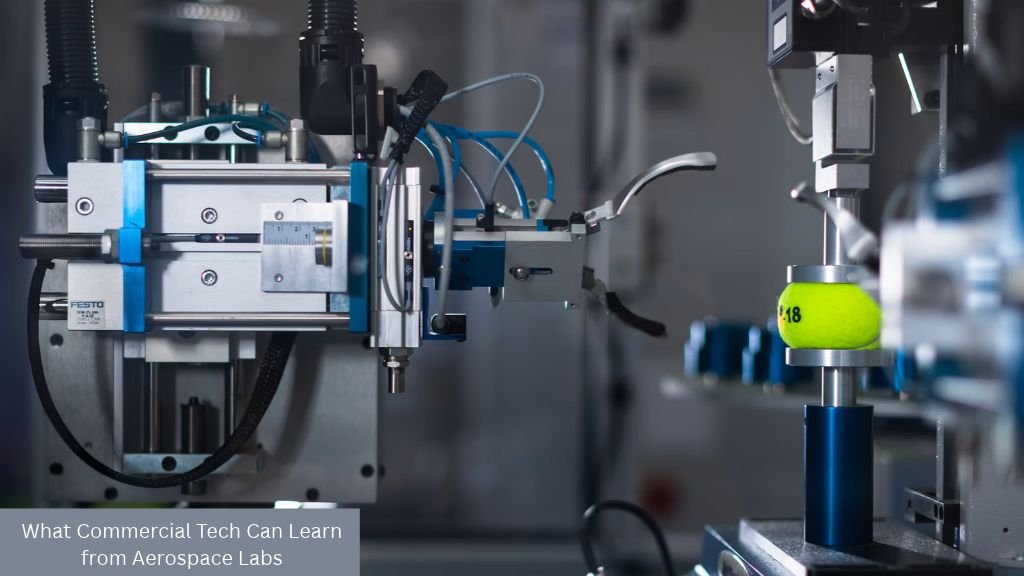

Aerospace laboratories solve problems that commercial technology teams increasingly recognize: equipment must work reliably, data must remain accurate and complex systems must perform under demanding conditions. The methods developed in these labs can help companies improve products in fields such as transportation, telecommunications, manufacturing and climate monitoring. These advancements often stem from dual-use technologies, which have the strategic power to benefit both commercial markets and national security interests.
Commercial teams shouldn’t copy aerospace processes without adaptation. They can, however, borrow disciplined testing, structured technology transfer and systems-level thinking. Those habits turn ambitious research into products that perform outside a controlled laboratory.
Bridging the Gap Between Lab and Market
A promising prototype still has a long way to go before it becomes a practical product. Laboratory teams may demonstrate that a sensor works under controlled conditions, while commercial customers expect the finished device to survive shipping, installation, software updates and years of daily use. Closing that gap requires early attention to manufacturing, maintenance and cost.
Technology transfer programs offer a useful model. The technology transfer process described by Parallax Advanced Research connects research organizations with companies that can develop technical work for broader markets. This approach treats transition as its own discipline, complete with milestones, documentation and defined responsibilities.
Commercial teams can apply the same logic by creating a transition plan before a prototype is complete. The plan should identify who will manufacture each component, which tests must be repeated outside the lab and what evidence customers will need before adoption. A thermal sensor designed for an aircraft research program, for example, might also support factory inspection. The commercial version may need a simpler interface, a lower-cost enclosure and compatibility with common maintenance software.
Intellectual property and access to facilities also need early consideration. The Federal Aviation Administration’s Technology Transfer Program shows how technical knowledge, facilities and federally developed research can move into wider use. Companies exploring similar collaborations should define ownership, licensing terms and publication rights before joint testing starts.
A practical transition review can focus on four questions:
- Can suppliers produce the design at the required volume?
- Does the product work beyond ideal laboratory conditions?
- Can technicians inspect, repair and update it?
- Is the customer’s measurable benefit greater than the adoption cost?
Clear answers prevent technical success from becoming a commercial dead end.
Tracking Dual-Use Technology Breakthroughs
Many aerospace advances have useful applications across public and commercial markets. Satellite imaging can help farmers monitor crop stress. Lightweight composites can reduce energy use in vehicles. Navigation research can support automated inspection equipment and emergency response systems. Even software built to interpret large streams of flight data can improve maintenance planning in factories.
Tracking these developments requires more than watching product announcements. Early signs often appear in research agreements, demonstration programs, licensing notices and supplier partnerships. The R&D collaboration spotlight from TechLink provides examples of organizations working together to move federally connected research toward practical use.
Industry reporting can add context by showing which concepts are receiving sustained investment and which remain experimental. For readers following military technology trends alongside aerospace research, Defense Innovation Review covers developments, industrial capacity and technical programs that may signal future applications in adjacent sectors.
Companies should organize this monitoring around a specific business need. A logistics software provider might track positioning systems, remote sensing and edge computing because those technologies could improve shipment visibility. A materials company could follow high-temperature coatings and additive manufacturing. This focused watchlist produces more useful findings than a broad feed of unrelated technical news.
Each potential breakthrough also needs a basic screening process. Teams should record its technical maturity, likely licensing route, regulatory constraints, required infrastructure and expected time to market. They should also identify the commercial problem it solves. A fascinating technology with no clear user, budget owner or integration path belongs on a research watchlist, not the active product roadmap.
Accelerating Enterprise Product Cycles
Aerospace development is associated with long timelines, yet its best practices can help commercial teams move faster. Clear requirements, controlled interfaces and early testing reduce the rework that often delays enterprise products. Speed comes from finding problems sooner, when changing a drawing or software module costs far less than redesigning a finished system.
Start by dividing the product into modules with well-defined connections. A remote monitoring platform might separate its sensing hardware, communications layer, data processing and customer dashboard. Each group can test its module against an agreed interface without waiting for every other part to be finished. This structure also makes it easier to replace one supplier or update one function later.
Digital models can shorten the feedback cycle further. A team developing an industrial drone platform, for instance, can simulate power use, temperature changes and communication loads before building a full prototype. Physical testing still matters, but simulation helps engineers choose the most valuable tests and avoid repeating predictable failures.
Enterprise teams can also adopt staged design reviews. A concept review confirms the customer problem and operating conditions. A preliminary review checks architecture, major suppliers and technical risks. A later review verifies that the design is ready for production and support. Each meeting should end with assigned decisions, evidence requirements and deadlines, not a large presentation that nobody consults again.
Shorter cycles still need configuration control. Engineers, sales teams and manufacturers must know which version of a design they’re discussing. A basic system for version numbers, test records and approved changes can prevent weeks of confusion. When a trial customer reports a failure, the team should be able to identify the installed hardware, software release and operating conditions within hours.
That level of traceability may sound formal for a growing company, but it protects speed. Teams spend less time reconstructing past decisions and more time fixing the actual issue.
Lessons in Extreme Engineering
Aerospace systems face vibration, temperature swings, radiation, pressure changes and limited opportunities for repair. Commercial products may operate in less severe environments, but they still encounter dust, moisture, weak connectivity, careless handling and inconsistent power. Extreme engineering offers a disciplined way to prepare for those realities.
Begin with an operating envelope that uses measurable limits. Instead of saying a device works outdoors, specify temperature, humidity, exposure time and resistance to water or dust. A connected sensor installed on a warehouse roof may function perfectly during a mild pilot program, then fail when summer heat raises the temperature inside its enclosure. Testing the full envelope exposes that weakness before a large rollout.
Engineers should also study how failures interact. One degraded component can create misleading data that affects an entire system. For example, a loose connector may cause intermittent readings that software interprets as real changes. Teams can reduce this risk through redundant measurements, automated reasonableness checks and alerts that distinguish sensor faults from genuine events.
Maintainability deserves the same attention as durability. A product that survives harsh conditions but takes four hours to inspect will create expensive service demands. Use accessible fasteners, replaceable modules and clear diagnostic codes. Give field technicians enough information to identify the likely fault before they travel to the site.
Finally, test recovery as carefully as normal operation. Interrupt power during an update, disconnect the network and feed the software incomplete data. Then confirm that the system returns to a known state without losing critical records. Those scenarios are common in commercial settings, even when the product never leaves an office or factory.
The most valuable aerospace lesson is disciplined curiosity about failure. Teams that ask how a product might break, how they’ll detect it and how quickly it can recover build technology that customers can depend on long after the first demonstration.