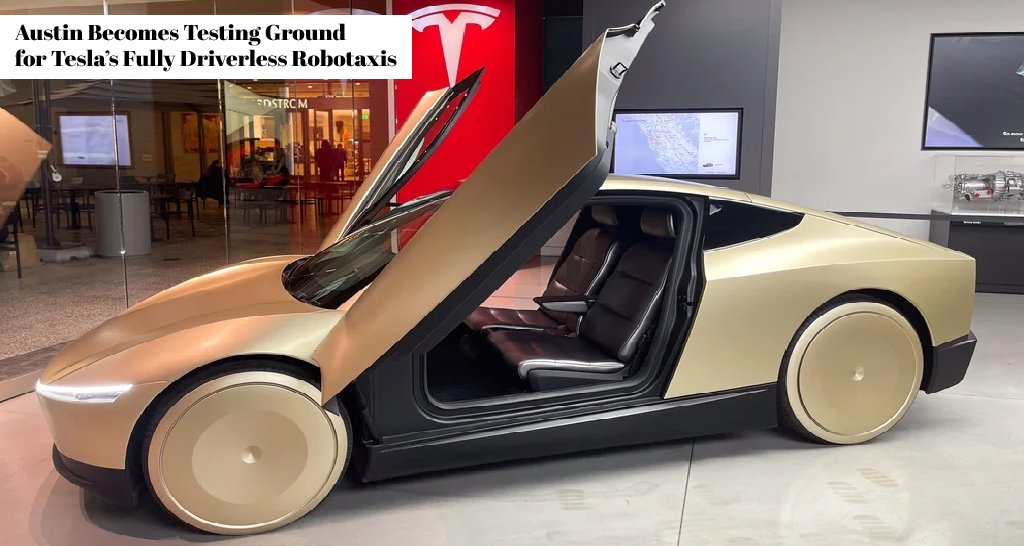

Tesla has taken a significant step forward in its quest for autonomous driving by launching robotaxi rides in Austin, Texas, all without a human safety driver on board. This development is a huge milestone for the electric vehicle company as it moves closer to achieving fully driverless transportation on public roads.
The robotaxi service is currently running at a limited capacity, featuring select Tesla vehicles that can navigate city streets all on their own, thanks to the company’s cutting-edge Full Self-Driving software. Passengers can enjoy the ride without anyone in the driver’s seat or monitoring the system from inside the car. They are completely relying on the vehicle’s cameras, sensors, and artificial intelligence to tackle real-world driving situations.
Tesla has been rolling out autonomous rides in Austin for several months now, starting off with trained safety monitors riding along. The choice to eliminate the human overseer shows a growing trust in how well the system performs and holds up. According to the company, these robotaxis can navigate intersections, manage traffic signals, change lanes, and tackle urban driving situations all on their own, without needing a human at the wheel.
Tesla’s recent launch puts it in a select group of companies offering truly driverless ride services in the U.S. But unlike its competitors, who often depend on lidar and pre-mapped routes, Tesla takes a different route. Their method relies on camera-based vision and neural networks that have been trained on a massive amount of driving data gathered from customer vehicles all around the globe.
The announcement has caught the attention of investors and industry experts alike, with many supporters hailing it as a significant step forward for Tesla’s long-awaited autonomy strategy. Proponents believe that expanding robotaxis could open a fresh revenue stream for the company and fundamentally transform urban transportation by cutting costs and enhancing vehicle usage.
The launch of autonomous vehicles has sparked fresh discussions about safety, regulations, and the public’s trust. These self-driving cars are still under the watchful eye of regulators, and Tesla’s technology has previously come under fire for its performance in tricky or unpredictable scenarios. As the Austin rollout unfolds, authorities and safety experts are gearing up to keep a close watch on the data that comes in from real-world usage.
Right now, the service is only available in certain areas and caters to a limited number of riders. Tesla is focusing on a slow and steady expansion instead of a big, immediate rollout. The company has mentioned plans to boost the number of robotaxis and broaden their coverage as they build confidence and as regulations permit.
The rollout in Austin is one of the most significant indicators that Tesla is transitioning from testing its autonomous technology to using it in the real world. This change could have profound effects on the future of ride-hailing, car ownership, and how we navigate our cities.