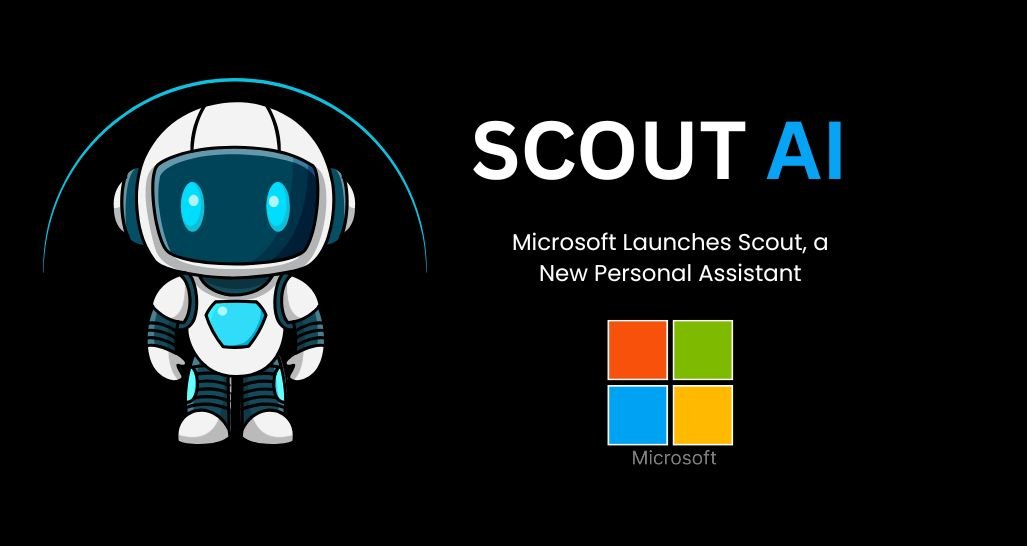


Software giant Microsoft has taken another major leap in the race to build autonomous workplace AI assistants by launching Scout, a new always-on personal agent designed to operate across the Microsoft 365 ecosystem. Unveiled at the company’s Build 2026 developer conference, Scout represents Microsoft’s most ambitious attempt yet to move beyond traditional chatbots and create an AI assistant capable of proactively managing work on a user’s behalf.
Unlike conventional AI assistants that respond only when prompted, Scout is designed to function as a persistent digital companion. Built on the increasingly popular OpenClaw framework, the system can continuously monitor a user’s workflow, learn preferences over time, and work across Outlook, Teams, Word, and other Microsoft 365 services. Users can also assign their assistant a custom identity and train it through ongoing feedback, allowing it to adapt to individual working styles and priorities.
Microsoft says Scout is intended to help knowledge workers handle many of the routine tasks that consume large portions of the workday. The assistant can review emails, organize schedules, identify conflicts, prepare meeting materials, surface relevant documents, and assist with administrative tasks. Rather than acting as a simple chatbot, Scout is designed to operate more like a digital coworker that remains active even when the user is not directly interacting with it.
The launch reflects a broader shift taking place across the AI industry. Over the past year, technology companies have increasingly focused on “agentic AI” systems—software capable of carrying out multi-step tasks independently instead of merely generating responses to questions. These agents are being developed to handle everything from scheduling and research to software development and project management. Microsoft’s Scout joins a growing list of products seeking to become the primary interface between users and their digital work environments.
Scout also represents an important strategic move for Microsoft as it seeks to reduce reliance on external AI providers. Alongside the assistant, the company introduced its internally developed reasoning model, MAI-Thinking-1, signaling its ambition to establish a stronger position in the AI ecosystem beyond its partnership with OpenAI. Industry observers view the simultaneous launch of Scout and Microsoft’s new AI models as evidence that the company is building a more independent AI stack for enterprise customers.
A key differentiator for Scout is its integration with OpenClaw, an open-source framework that has gained significant attention for enabling highly autonomous personal AI agents. OpenClaw-inspired systems are designed to coordinate multiple tools, maintain memory across interactions, and execute complex workflows with limited human supervision. Microsoft believes combining this flexibility with enterprise-grade security could make Scout attractive to organizations seeking AI automation without sacrificing governance and compliance controls.