

“BE BOLD, TAKE RISKS, SEEK WISE COUNSEL, WORK HARD, AND FOLLOW YOUR DREAM!”
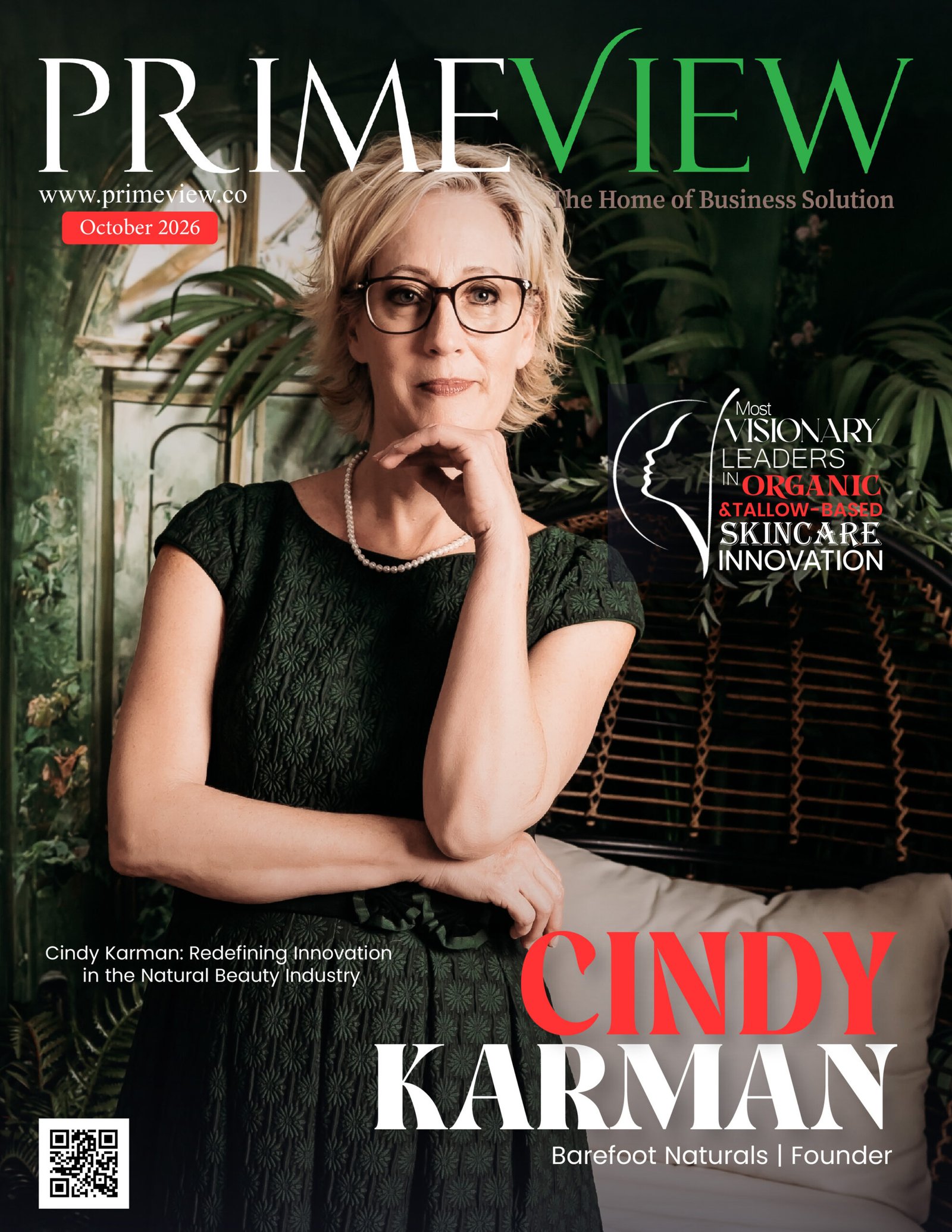
Meet Cindy Karman, the founder of Barefoot Naturals LLC, a luxury natural bath and body company fully dedicated to creating handcrafted products with high-quality ingredients. Cindy started Barefoot Naturals to generate extra income as a single mother to provide sporting opportunities for her son and daughter. Her entrepreneurial journey began at the local farmers’ market, where she sold handcrafted, cold-process soap bars made with natural ingredients.
Cindy began selling natural products from other companies but couldn’t find any product made with whole-food ingredients for the skin. She felt every product lacked essential elements needed to keep skin healthy and strong. This experience inspired her to fill the void and create a skincare brand that works for everyone and is packed with natural nutrients our skin needs. This eventually led to the inception of Barefoot Naturals.
Over the past decade, Barefoot Naturals has evolved with the skincare industry that has become increasingly sophisticated. In the past, brands could distinguish themselves by using terms such as natural, organic, plant-based, etc. However, today customers are more aware, and they increasingly want brands to prove what is in the product, why it is there, where it came from, whether it is safe, and, most importantly, whether it actually works.
The Combination of Nature with Science
For Cindy, Barefoot Naturals is a combination of nature and science. It is more about understanding how each ingredient works, why it belongs to a formulation, and how it interacts with other ingredients.
She looks to nature for ingredients such as botanical oils, herbs, plant extracts, clays, and other naturally derived ingredients. However, she doesn’t select an ingredient only because it’s natural. Instead, she researches its function, its benefits, how it interacts with other ingredients, and whether it truly contributes something meaningful to the finished product.
For Cindy, every ingredient should have a reason for being there. She aims to create balanced and thoughtful formulations to nourish, protect, cleanse, or support the skin without unnecessary complexity.
“I’m not simply creating natural skincare; I’m creating thoughtfully formulated skincare rooted in nature, guided by research and made with a deeper understanding of what we are feeding our skin,” she explains.
It’s About Natural Skincare
For Cindy, natural skincare is not only about avoiding synthetic ingredients. She firmly believes nature gives us an incredible variety of oils, botanicals, clays, herbs, and other natural ingredients that can nourish and support the skin.
“Our skin is our body’s largest organ and an incredibly important protective barrier,” she explains. “Certain substances applied to the skin can be absorbed through it, and under the right conditions, some can ultimately reach systemic circulation. This is a major reason I believe we should be fully aware of what we put on our skin.”
This philosophy makes research a major part of Barefoot Naturals. Cindy doesn’t select an ingredient simply because it sounds good on a label or it is trending. She looks at its purpose, its benefits, and how it can work alongside other ingredients to create a thoughtful, balanced formula.
This captures her belief that skincare deserves the same importance as food. Just as greater awareness of food choices can encourage more mindful decisions about what goes into the body, she believes the same intentionality should extend to the products people apply to their skin.
Cindy often asks people, “What are you feeding your skin?”
Is the Skincare Industry too Complicated
Cindy feels that over the years, the skincare industry has become unnecessarily complicated in some ways. She also explains that we have reached a point where consumers are sometimes made to feel that they need a ten-step routine, multiple serums, several different active ingredients, and a different product for every possible concern to have healthy skin.
At Barefoot Naturals, one of the things Cindy really believes is that more isn’t necessarily better. She feels constantly layering products or introducing too many ingredients at once can make it harder to understand what your skin actually needs and what truly works. Every skin is unique, and a skincare routine should always be based on what your skin needs.
“I believe in using just what you need and what works for you. Brands can help create that simplicity by developing products that are intentional and multifunctional. Instead of putting an ingredient into a formula simply because it is popular or creating another product just to add another step to the routine, we should be asking, “What purpose does this serve? Does the customer actually need it? And does it improve the performance of the formula?”- Cindy says.
For her, simplicity isn’t about doing less for your skin; it’s about doing what your skin actually needs and doing it well. Good skincare shouldn’t feel overwhelming; it should feel manageable and personal.
Always Ask Questions
Cindy believes a genuinely transparent brand should always make its full ingredient information easy to find, and should explain the purpose of its key ingredients without relying on exaggerated promises. There should be credible research backing all the claims about what a product can accomplish.
She also suggests that consumers should pay attention to the language a brand uses. They should always be cautious when they see words like “miracle,” “chemical-free,” “completely toxin-free,” or claims that a cosmetic product can cure or treat a medical condition.
“Don’t be afraid to ask questions. A company that truly understands its formulations should be comfortable having those conversations,” she suggests. “At Barefoot Naturals, I encourage customers to read, research, ask questions, and understand what they’re putting on their skin. An informed consumer is not something a good skincare brand should be afraid of, but encouraged.”
Sustainability is Key
Under Cindy’s leadership, sustainability at Barefoot Naturals starts with sourcing. Whenever possible, she looks for quality ingredients from responsible suppliers, and she considers not only what an ingredient can do for the skin, but also where it comes from, how it is produced, and whether there are more responsible sourcing options available. Barefoot Naturals is a Go Texan partner, and Cindy believes in supporting local and Texas-based businesses when it makes sense for local products and customers.
Production is another important part of the Barefoot Naturals sustainability program. As a small-batch manufacturer, Cindy can be very intentional about how much she makes. She doesn’t believe in producing excessive amounts of product simply to fill shelves. Making products in thoughtful quantities helps her maintain freshness and quality while reducing unnecessary waste.
Packaging is also not out of the conversation. Cindy looks at ways to make responsible choices while still protecting the integrity, safety, and quality of her products. She believes sustainability means continually asking whether there is a better, more responsible way to do something.
“At Barefoot Naturals, I believe that if I’m going to look to nature for the ingredients that help me create my products, then I also have a responsibility to be thoughtful about how I use those resources,” she states.
For Cindy, choosing an ingredient is about more than simply finding the best price. She wants to understand where the ingredient comes from, how it is produced, the quality standards behind it, and whether the supplier’s practices align with the values of Barefoot Naturals. She always looks for documentation, including information about origin, processing methods, purity, testing, and quality when available.
“I start by looking for reputable suppliers. I want documentation when it is available, including information about origin, processing methods, purity, testing, and quality. From an environmental perspective, I also consider how ingredients are grown, harvested, processed, and transported,” she explains.
Emerging Developments in the Skin Care Industry
Cindy is closely watching emerging developments in natural skincare and haircare, particularly as traditional ingredients gain renewed attention and modern formulation science offers new ways to understand their potential.
One of the biggest areas for her right now is beef tallow, an ingredient with a long history in personal care that has recently regained popularity. Cindy believes this renewed attention also highlights the need for better scientific research. She is particularly interested in emerging studies examining its fatty-acid composition, skin compatibility, moisturizing potential, barrier-supporting properties, and how factors such as sourcing and processing may affect the finished ingredient.
Another area of research and development she is looking into is the evolution of naturally focused haircare. Traditionally, it has been challenging to create natural or naturally derived haircare products that provide the cleansing, conditioning, stability, sensory, and performance consumers expect from conventional products. Cindy is especially focused on the benefits of fermented rice water, aloe, hydrolyzed plant proteins, and amino acids and how they can be incorporated into a complete hair and scalp treatment.
Rethinking the Industry
If Cindy could change one thing about the industry, then she would change the idea that innovation always has to mean more-more products, more ingredients, more trends, more production, and ultimately more consumption. She would prefer to see the industry place greater value and recognition on the incredible potential that natural ingredients can offer.
The beauty industry operates at an enormous scale, with manufacturers under constant pressure to reduce costs, increase margins, and introduce new products to maintain consumer interest. While commercial growth is important, Cindy believes the pursuit of profitability should not overshadow ingredient quality, purposeful formulation, product performance, and environmental responsibility.
“Nature has given us an extraordinary variety of materials to work with. I believe profitability, natural ingredients, scientific research, performance, and sustainability can coexist,”– she concludes.