


Running a business comes with plenty of rewards, but it also comes with risks. Even the most experienced professionals can make mistakes, overlook details, or face misunderstandings with clients. Unfortunately, small errors can sometimes lead to major financial consequences, damaged reputations, and lost opportunities.
The good news is that there are practical ways to reduce these risks and keep your business protected. By putting smart systems and safeguards in place, you can avoid many common problems before they become expensive issues.
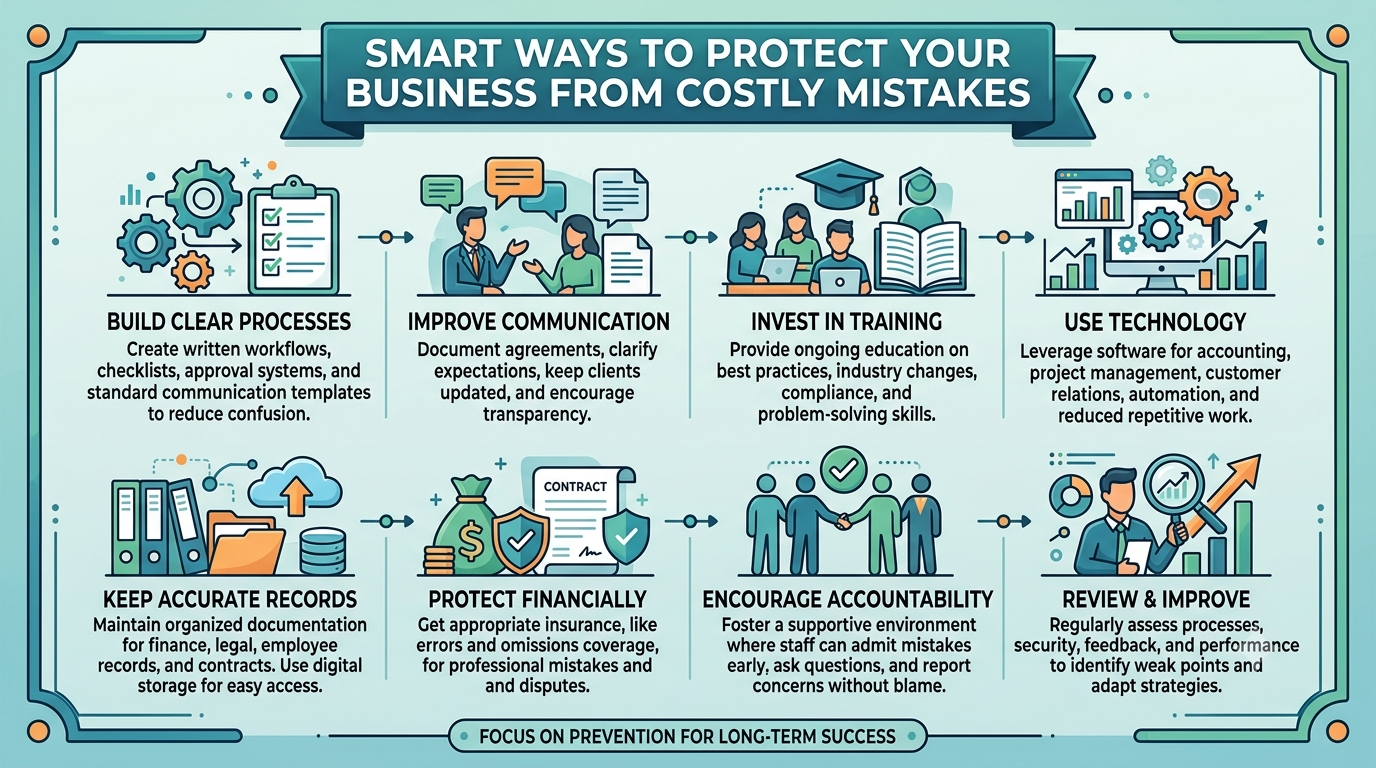
Build Clear Processes and Procedures
One of the best ways to prevent costly mistakes is to create clear and consistent processes for your team to follow. When employees understand exactly how tasks should be completed, there is less room for confusion or missed steps.
This can include:
- Written workflows for daily tasks
- Checklists for projects and client work
- Approval systems for important decisions
- Standard communication templates
Consistency helps businesses stay organized and reduces the chance of human error. It also makes training new employees much easier, which is essential as your company grows.
Improve Communication with Clients
Many business disputes start because of unclear expectations. A client may misunderstand what is included in a service, or a business may fail to explain timelines properly. Strong communication can help avoid these situations before they escalate.
Always make sure agreements are documented clearly. Contracts, project outlines, and written approvals can all help prevent misunderstandings. It is also important to keep clients updated throughout a project so there are no surprises along the way.
Encouraging transparency builds trust and creates stronger long-term relationships with customers.
Invest in Employee Training
Employees are often a company’s biggest asset, but they can also become a source of costly mistakes if they are not properly trained. Ongoing education helps staff stay informed about best practices, industry changes, and company expectations.
Training should not only focus on technical skills. Businesses should also teach employees about:
- Data protection
- Customer service
- Compliance requirements
- Time management
- Problem-solving strategies
A knowledgeable team is more confident, productive, and capable of avoiding preventable errors.
Use Technology to Reduce Risk
Modern technology can help businesses automate tasks, improve accuracy, and identify potential issues early. Manual processes often leave room for mistakes, especially when handling large amounts of information.
Software tools can help with:
- Accounting and invoicing
- Project management
- Customer relationship management
- Scheduling
- Inventory tracking
Automation reduces repetitive work and minimizes the risk of oversight. It also gives business owners better visibility into operations, making it easier to catch problems before they become serious.
Keep Accurate Records
Poor recordkeeping can create major financial and legal problems for businesses. Missing invoices, undocumented agreements, or incomplete employee records can lead to disputes and compliance issues.
Maintaining organized documentation is essential for protecting your company. Digital storage systems can make it easier to access records quickly while also improving security.
Businesses should regularly review records to ensure everything is up to date and accurate. This includes contracts, tax documents, employee information, and communication logs.
Protect Your Business Financially
Even with strong systems in place, mistakes can still happen. That is why having the right protection measures is so important. Financial safeguards can help businesses recover more easily when unexpected issues arise.
One important option for service-based businesses is errors and omissions insurance coverage. This type of protection can help cover claims related to professional mistakes, missed deadlines, or allegations of negligence. Having coverage in place can provide peace of mind and help businesses avoid severe financial strain from legal disputes.
Encourage a Culture of Accountability
Businesses that encourage accountability are often better at preventing costly problems. When employees feel comfortable admitting mistakes early, issues can usually be resolved before they grow larger.
Leaders should focus on creating an environment where employees can:
- Ask questions
- Report concerns
- Learn from errors
- Suggest improvements
Blame-focused cultures often cause people to hide problems, which can make situations much worse over time. A proactive and supportive workplace encourages faster solutions and stronger teamwork.
Regularly Review and Improve Your Strategies
Risk management is not something businesses should only think about once. Markets, technology, and customer expectations constantly change, which means companies must continue adapting.
Regular reviews can help identify weak points in operations and reveal opportunities for improvement. Business owners should assess processes, security measures, customer feedback, and financial performance on an ongoing basis.
Staying proactive allows businesses to respond quickly to challenges while continuing to grow with confidence.
The Bottom Line
Mistakes are a natural part of running any business, but costly problems can often be avoided with the right approach. Clear communication, employee training, strong organization, and financial protection all play a major role in reducing risk.
By focusing on prevention rather than reaction, businesses can protect their reputation, strengthen client relationships, and create a more stable foundation for long-term success.