
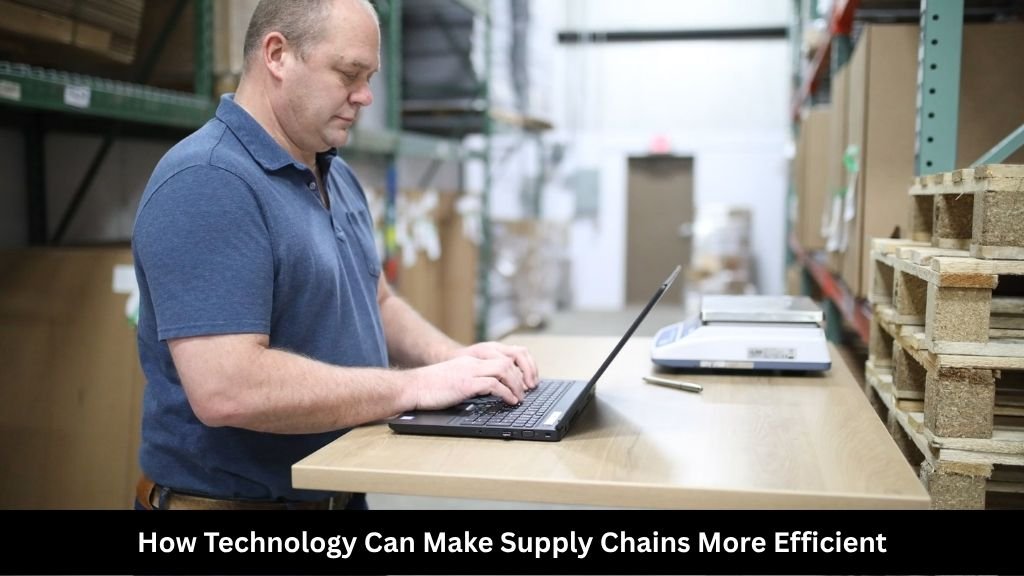


From the moment your customers click “buy” until a package arrives at their door, your supply chain kicks into gear. It brings together your manufacturers, warehouses, shippers, and retail partners to keep products moving. When it works well, your customers barely notice it. But when something goes wrong, they feel the impact through delays, empty shelves, and frustration. Thankfully, technology now gives your business powerful ways to make these complex networks more efficient, transparent, and resilient. Today, technology in supply chain management has grown from simple record-keeping into the backbone of modern logistics.
Gaining Full Visibility with Real-Time Tracking
One of the biggest headaches in managing a supply chain is simply knowing where everything is at any given moment. Not long ago, a shipment could vanish into a “black hole” somewhere between the factory and the distribution center. Today, real-time tracking technology gives us incredible insight. GPS trackers on trucks and ships let companies watch their fleets, while Internet of Things (IoT) sensors can be attached to individual pallets or even products. These sensors can also tell us about conditions such as temperature and humidity, which are crucial for items that spoil easily. This constant flow of data helps managers spot potential delays, reroute shipments around traffic or bad weather, and give customers accurate delivery times.
Streamlining Warehouse Operations with Automation
The modern warehouse is a hub of carefully planned activity, and automation can help you move orders faster and more accurately than ever. Instead of having workers walk miles of aisles to find items, automated systems can bring the goods right to them, helping your products move through the warehouse more quickly. Automated guided vehicles (AGVs) move pallets around the facility, while robotic arms can pick, sort, and pack items with incredible speed. For these systems to work, you need every item to be perfectly tracked. This relies on clear, scannable barcodes and RFID tags. Consistent and reliable labeling is the basis of warehouse automation, which is why proper industrial printer maintenance is so important for your operation. One unreadable label can stop a multi-million-dollar automated system dead in its tracks and cause delays that ripple through your entire supply chain, affecting when your customers receive their products.
Using Predictive Analytics to Stay Ahead of Demand
Technology also helps you manage information in ways that directly affect what your customers can buy and when they can get it. Your business now has access to huge amounts of data, from past sales figures to current market trends and even weather forecasts. Predictive analytics uses artificial intelligence (AI) and machine learning to sift through this data and make surprisingly accurate guesses about what your customers may want next. For instance, if you run an apparel company, you might spot a social media trend and ramp up production of a certain style before it becomes a bestseller, making it more likely to be available when demand peaks. As you use artificial intelligence across logistics, you can better predict shipping lane congestion or anticipate port delays before those problems affect your customers’ deliveries.
Connecting the Dots with Integrated Software
Your supply chain can involve dozens of different partners, each with its own ways of doing things and its own systems. If those partners do not share information effectively, your customers may experience delays, missing updates, or unavailable products. Integrated software platforms, such as Enterprise Resource Planning (ERP) or Supply Chain Management (SCM) systems, address this by creating a single, shared source of information for everyone involved. When your manufacturer updates a production schedule, your shipping company and retail team can see that update instantly. This shared view helps your partners work together, reduces manual data entry, and quickly resolves issues that arise. For your business, it turns a series of disconnected steps into one smoother, more reliable process.
Bringing technology into your supply chain can boost your business’s profits, especially with the emergence of new real-time analytics platforms. More importantly for you, it creates a more reliable and responsive system, so the products your customers need are more likely to be available when they need them.